


1. General Introduction / Course Learning Outcomes
General introduction:
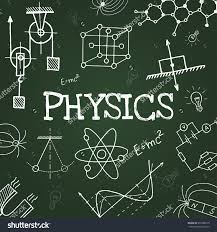
Physics is a college-preparatory science course that fulfills a physical science graduation requirement. The course provides a conceptually grounded understanding of the fundamental principles and processes of the physical world. In addition, the school offers AP Physics 1, equivalent to a one-semester, algebra-based college-level physics course, designed to prepare students for the College Board AP exam.
Learning outcomes:
By the end of the course, students can:
-
Build a strong conceptual understanding of core physical principles and processes that govern the natural world.
-
Apply learned skills and scientific reasoning to solve complex, multi-step physics problems using evidence and quantitative thinking.
-
Use models, data, and mathematical relationships to explain physical phenomena and justify conclusions.
-
(For AP Physics 1 pathways) Develop the skills and readiness needed to successfully sit for the College Board AP Physics 1 exam, aligned to core “Big Ideas” and scientific practices.
2. Content Overview
The course spans major physics domains from foundational mechanics to modern physics:
-
Mechanics: Newton’s Laws of Motion, momentum, energy, circular motion, rotational mechanics, torque, gravity, and gravitational interactions.
-
Properties of matter and thermodynamics: characteristics of matter, heat, temperature, and thermodynamic principles.
-
Waves and optics: sound and light, including reflection, refraction, lenses, diffraction, and interference.
-
Electricity and magnetism: electric fields and potential, current and circuits, magnetism, and electromagnetic induction.
-
Modern physics: an introduction to the atom and quantum ideas, atomic nucleus and radioactivity, nuclear fission, and nuclear fusion.
-
Big Ideas (especially in AP Physics 1): the course emphasizes enduring scientific principles and processes that connect topics across traditional boundaries.
3. Learning and Teaching Approach
Physics learning is designed around “understand and apply,” with strong emphasis on investigation and evidence:
-
Inquiry-based learning and lab work: students learn essential concepts through demonstrations, discussion, and laboratory investigations that involve collecting and analyzing quantitative data.
-
Blended learning: instructional videos and online resources deliver key content, allowing interactive time to focus on coaching, guided problem-solving, and targeted support in small groups or individually.
-
Project-based learning (PBL): interdisciplinary projects encourage creative demonstration of understanding and strengthen design thinking and real-world application.
-
Backwards design: lessons are built from clear outcomes to ensure instruction and assessment align with NGSS expectations and key scientific practices.
 Lessons: