


1. General Introduction / Course Learning Outcomes
General introduction:
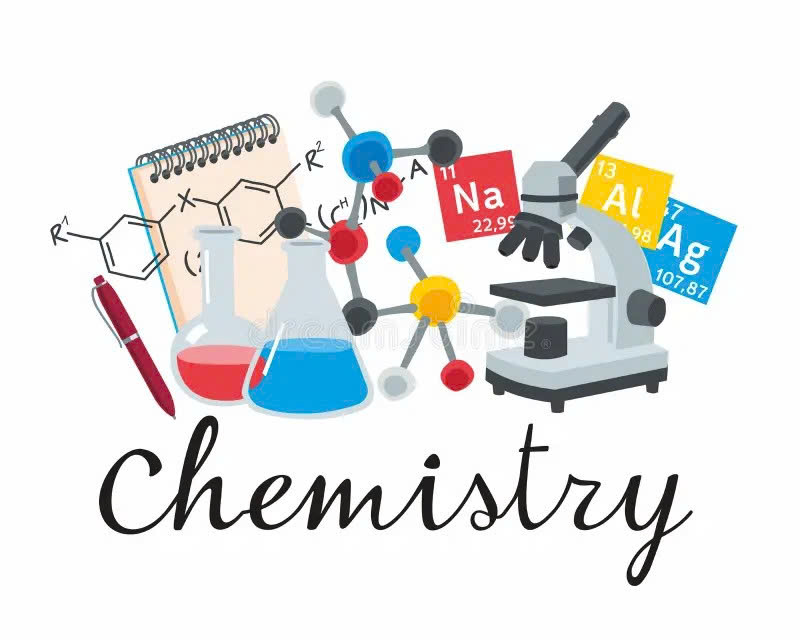
Chemistry is a college-preparatory science course that fulfills a physical science requirement. The course provides a rigorous, standards-aligned learning experience designed to prepare students for advanced science study and the demands of the 21st-century world. Using a Backwards Design approach, the curriculum is mapped from clear academic expectations—focusing on what students must know and be able to do by the end of the year.
Learning outcomes:
By the end of the course, students can:
-
Use accurate measurement and the metric system to collect, analyze, and communicate scientific data.
-
Explain core chemical principles using models of atomic and molecular structure, the Periodic Table, and chemical bonding.
-
Apply conservation of matter and stoichiometry to solve quantitative chemistry problems.
-
Analyze the behavior of matter across solid, liquid, and gas states and connect particle-level models to observable properties.
-
Evaluate chemical processes including acids and bases, solutions, reaction rates, equilibrium, and energy changes using evidence-based reasoning.
-
(When included) Describe and apply foundational ideas in chemical thermodynamics and electrochemistry.
2. Content Overview
The curriculum includes both foundational and advanced chemistry topics:
-
Foundations: the metric system, measurement, accuracy, precision, and data interpretation.
-
Atomic Theory and Structure: atomic and molecular structure, the Periodic Table, and chemical bonding.
-
Quantitative Chemistry: conservation of matter and stoichiometry (mass relationships and mole-based calculations).
-
States of Matter: particle models and properties of solids, liquids, and gases.
-
Chemical Reactions and Systems: acids and bases, solutions, reaction kinetics (reaction rates), and chemical equilibrium.
-
Energy and Change: chemical thermodynamics; electrochemistry (time permitting).
3. Learning and Teaching Approach
Instruction is designed to promote understanding through active investigation and application rather than rote memorization:
-
Blended and inquiry-based learning: students access key concepts through instructional videos and structured online resources, then use interactive time to ask questions, solve problems, and deepen understanding.
-
Practical work: learning is reinforced through lab experiments, individual projects, and research tasks that connect chemistry to real-world contexts.
-
Collaborative learning: students build scientific thinking through discussions, peer collaboration, and hands-on activities that strengthen reasoning and communication.
-
Digital integration: platforms and resources (e.g., Khan Academy-style supports) enable targeted practice and more personalized coaching based on student progress.
 Lessons: